Rose color meanings and the language of flowers
Published
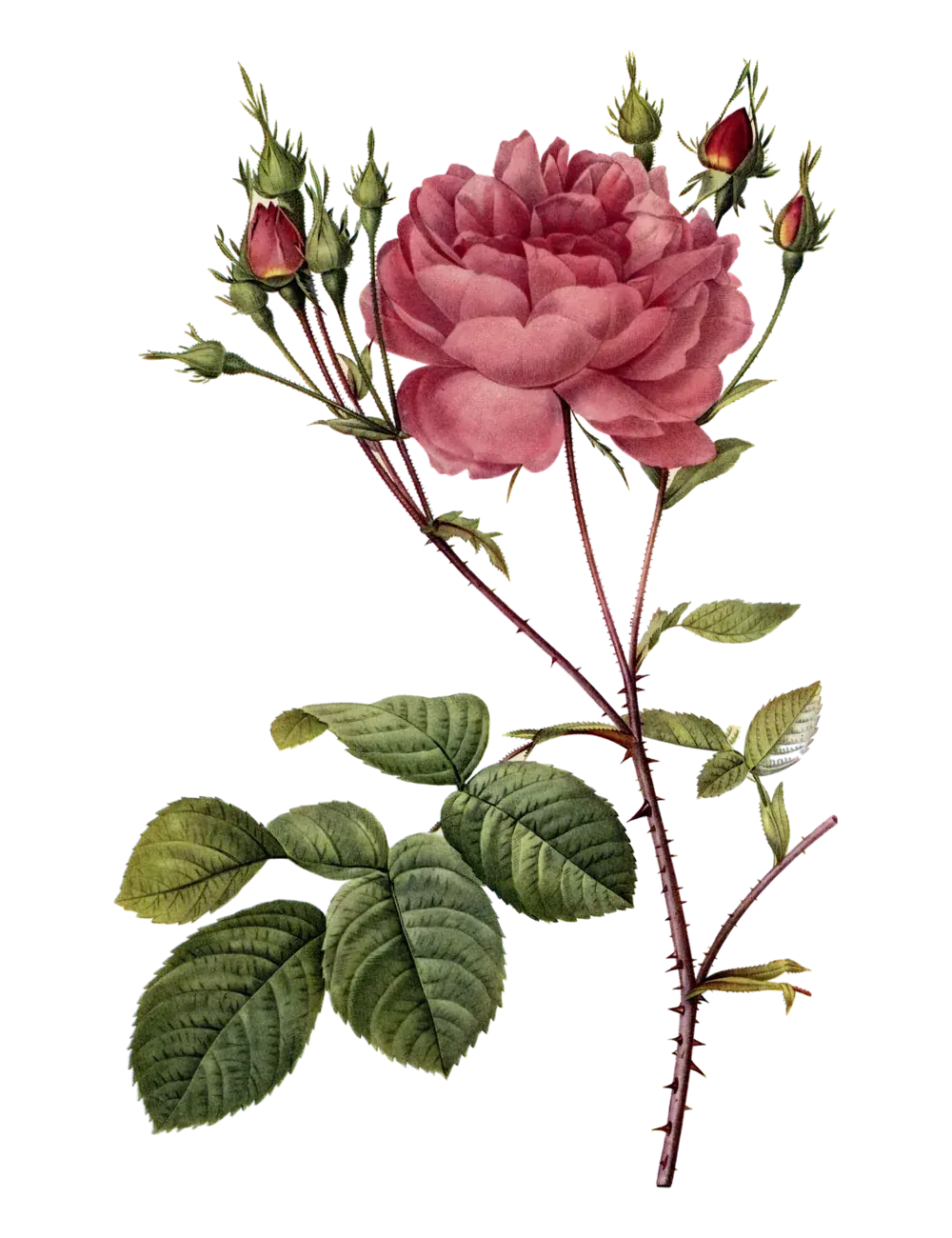
Red roses mean love, pink roses mean affection or gratitude, white roses mean new beginnings, and yellow roses mean friendship. Orange roses stand for desire, peach for modesty, coral for friendship and sympathy, and lavender for love at first sight. These meanings are traditions from the Victorian language of flowers and later lists, which do not always agree; Kate Greenaway's 1884 flower dictionary and West Virginia University Extension both read yellow roses as jealousy. Our bouquets have no color option. The White Lilies bouquet has white roses, and in the others the rose colors follow the season and what our fulfillment partner has fresh. Write the meaning you want in the card message.
University of Vermont Extension gives these meanings and traces the language of flowers to the Victorian era.
- Red: love and passion. The red rose, sometimes called the lover's rose, is the classic Valentine's flower.
- Pink: romantic love and affection, or gratitude and appreciation. Pink roses are often given to mothers and other female relatives.
- White: new beginnings and an open heart. White roses are often called the bride's rose.
- Yellow: friendship, admiration, happiness and warmth. Kate Greenaway's 1884 flower dictionary reads yellow roses as decrease of love or jealousy, and West Virginia University Extension lists infidelity, jealousy and decrease in love.
West Virginia University Extension gives these meanings in its guide to the language of flowers, and notes that the meanings of flower colors are not perfectly defined.
- Orange: fascination and desire.
- Peach: modesty.
- Coral: friendship, modesty and sympathy.
- Lavender: love at first sight.
- Purple: enchantment.
- Dark crimson: mourning.
West Virginia University Extension, University of Vermont Extension, the Society of American Florists and Kate Greenaway's 1884 flower dictionary give no meaning for green roses.
Floriography: The Language of Flowers, from West Virginia University Extension
In the 1800s, guidebooks to the language of flowers gave each flower a meaning, and a flower's color could change it. Learning the meanings became a popular pastime, and flowers could say what the giver could not say in public.
The authors drew the meanings from visual likenesses and wordplay, literature, religion, folklore and the plants' own traits. Smithsonian Gardens notes that the flowers of the Victorian era do not carry the same meanings today.
Kate Greenaway's Language of Flowers, a flower dictionary published in London in 1884, gives roses these meanings.
- A rose: love.
- A deep red rose: bashful shame.
- A white rose: I am worthy of you.
- A yellow rose: decrease of love, or jealousy.
- Red and white roses together: unity.
- A thornless rose: early attachment.
- A red rosebud: pure and lovely. A white rosebud: girlhood.
The dictionary has no entry named for a pink, orange, peach, coral, lavender or green rose.
Red and white roses together mean unity. The Society of American Florists gives that meaning today, and Kate Greenaway's 1884 flower dictionary gives it too.
In a Victorian posy, the central flower carried the main message and each added flower had to support it, according to West Virginia University Extension.
The Society of American Florists says flowers had set meanings in Victorian times because the choice of flowers was limited and people used symbols more than words. Today, it says, there are no rules, and the sentiment gives a gift its meaning.
A single red rose can mean love at first sight, or that the recipient is the one and only object of your love. A dozen red roses symbolizes a declaration of complete love. Both meanings come from University of Vermont Extension.
Kate Greenaway's 1884 flower dictionary has no meaning for a dozen roses. It gives a full-blown rose placed over two buds the meaning secrecy.
The Garden Roses bouquet mixes garden roses and spray roses with eucalyptus, in sizes of about 12, 18 or 24 stems. Stem counts are approximate and the rose colors vary, so we cannot promise a dozen red roses or any set number of roses.
No. Our bouquets have no color option. The White Lilies bouquet has white roses. In the other bouquets with roses, the rose colors follow the season and what the partner has fresh on the day.
If a flower is unavailable, it may be replaced with one of similar or greater value. A substitute is chosen to keep the style and colors of the original where the fulfillment partner considers that practical, and it may differ in variety, color, size or number of stems.
If a color's meaning matters to you, write that meaning in the card message, because you cannot choose the rose colors.
Each note covers the flowers it names. The greenery varies with the season and is not covered here.
Garden roses
It has garden roses and spray roses with eucalyptus. The rose colors vary with what the partner has fresh.
Eucalyptus is toxic to cats and dogs. The roses are not. Chewing the eucalyptus in this bouquet can cause drooling, vomiting, diarrhea, lethargy and weakness.
Shop Garden RosesPeonies and roses
It has peonies and garden roses with seasonal greenery. Peonies are in season from April to June, and garden roses take their place outside those months.
Peonies are toxic to cats and dogs. The garden roses are not. Eating peonies can cause vomiting, diarrhea and lethargy.
Shop Peonies and RosesRanunculus
It has ranunculus and spray roses with greenery.
Ranunculus is toxic to cats and dogs. The spray roses are not. Chewing ranunculus can cause vomiting, diarrhea, drooling, mouth sores, loss of appetite, lethargy and a wobbly walk.
Shop RanunculusWhite lilies
It has white lilies and white roses with greenery.
Shop White LiliesCan cause fatal kidney failure in cats
The roses are not toxic. The lilies are true lilies (Lilium candidum), and every part is poisonous to cats, including the pollen and the vase water. A bite of a petal or pollen licked off fur is enough. If a cat may have touched a lily, take it to a vet at once.
Hydrangea
It has hydrangeas and roses with greenery. The rose colors vary with what the partner has fresh.
Hydrangeas are toxic to cats and dogs. The roses are not. Hydrangeas contain a compound that can release cyanide. Eating them usually upsets the stomach, with vomiting, diarrhea and lethargy; cyanide poisoning is rare.
Shop Hydrangea
Outside July to October, the Dahlias bouquet arrives with garden roses in place of the dahlias.
If a pet chews a plant marked toxic here, or one you cannot name, call your vet.
Pet toxicity from the ASPCA Animal Poison Control plant list
See also
- How to keep cut flowers fresh
- All flower guides
- Garden Roses bouquet
- Anniversary flowers
- Birthday flowers
- Just because flowers
- Thank you flowers
- Sympathy flowers
- Delivery and substitutions